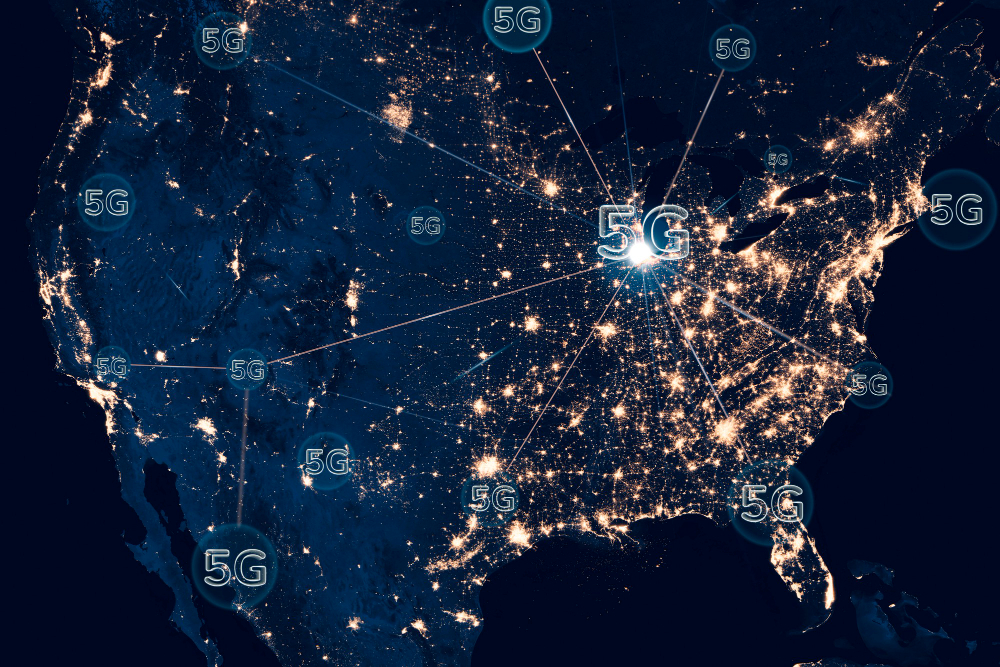
1. Introduction: The Next Great Leap in Connectivity
Every decade brings a digital revolution — and in 2025, that revolution is connectivity itself.
As we transition from 5G to 6G, the internet isn’t just becoming faster; it’s becoming smarter, immersive, and more human-like.
While 5G is still expanding globally, 6G research is already shaping the future — promising speeds a thousand times faster and a completely new way to experience digital life.
2. What Is 5G? A Quick Refresher
5G — the fifth generation of wireless networks — marked a massive leap from 4G LTE.
It introduced:
-
Speeds up to 10 Gbps
-
Latency as low as 1 millisecond
-
Massive connectivity for billions of IoT devices
This wasn’t just faster browsing — it enabled smart cities, real-time healthcare, and autonomous vehicles.
3. What Is 6G? The Future of Wireless Communication
6G, expected to launch commercially around 2030, takes connectivity to unimaginable levels.
It builds upon 5G but adds:
-
AI-native networks
-
Terahertz frequency spectrum
-
Quantum-secure communication
6G aims to create a “connected intelligence ecosystem”, where humans, devices, and AI interact seamlessly.
4. Key Differences Between 4G, 5G, and 6G
| Feature | 4G | 5G | 6G |
|---|---|---|---|
| Speed | Up to 100 Mbps | Up to 10 Gbps | Up to 1 Tbps |
| Latency | 50 ms | 1 ms | <0.1 ms |
| Focus | Mobile broadband | IoT and automation | AI-driven immersive internet |
| Example | Streaming video | Smart cities | Holographic telepresence |
6G’s potential lies not just in speed — but in its ability to simulate human senses online.
5. How 5G Is Transforming the Internet in 2025
By 2025, 5G networks are everywhere — from hospitals to highways.
Smart Cities
Connected traffic lights, self-driving cars, and smart grids rely on 5G for real-time communication.
Autonomous Vehicles
Vehicles exchange instant data to prevent accidents and optimize traffic flow.
Edge Computing
With 5G, data processing happens closer to users, reducing lag and improving cloud efficiency.
6. Enter 6G: The Next Frontier (2030 and Beyond)
6G aims to achieve speeds up to 1 terabit per second, enabling:
-
Holographic video conferencing
-
Brain-computer interfaces (BCIs)
-
Real-time global simulations
Imagine feeling a handshake during a virtual meeting — or experiencing a concert as if you were physically there.
That’s the 6G internet of the senses.
7. The Role of AI in 5G and 6G Networks
AI is the brain behind next-gen internet.
It helps manage vast data flows, optimize bandwidth, and predict demand before it happens.
-
Self-healing networks: Fix issues automatically.
-
AI-driven routing: Ensures zero lag for critical applications.
-
Predictive analytics: Keeps systems efficient and secure.
AI transforms the internet from a passive tool into an intelligent partner.
8. 5G and 6G in Smart Homes and IoT Ecosystems
Our homes are becoming “digital organisms.”
From refrigerators that order groceries to thermostats that learn your routine, IoT thrives on 5G.
With 6G, devices will anticipate needs — creating a truly intelligent environment.
Think of it as living inside an AI-powered network where every device communicates flawlessly.
9. Impact on Businesses and Industries
Manufacturing
5G enables real-time automation and robotics; 6G will add predictive, autonomous control.
Healthcare
Surgeons now perform remote operations via 5G.
6G could introduce haptic feedback, allowing them to feel textures during virtual surgery.
Logistics
AI + 5G sensors track goods globally, reducing waste and improving efficiency.
10. The Gaming and Entertainment Revolution
5G revolutionized cloud gaming; 6G will obliterate latency altogether.
-
5G: Enables 4K streaming and VR gaming.
-
6G: Powers holographic streaming, metaverse integration, and real-time emotion feedback.
Gamers will no longer download — they’ll stream entire worlds instantly.
11. How 5G and 6G Will Redefine the Internet of Senses
The Internet of Senses (IoS) connects all five senses digitally:
-
Touch: Haptic gloves simulate physical interaction.
-
Smell: Digital scent emitters replicate environments.
-
Taste: Neurological signals simulate flavors.
6G will merge biology with technology — creating an immersive, emotional internet experience.
12. Economic and Global Impact of 5G and 6G
According to PwC, 5G could add $1.3 trillion to global GDP by 2030.
6G’s impact could be several times greater, driving:
-
New industries
-
Smarter governance
-
Inclusive digital economies
Nations like China, the USA, South Korea, and Finland are already leading in 6G R&D, viewing it as strategic digital infrastructure.
13. Challenges Ahead for 5G and 6G Deployment
Despite the excitement, challenges persist:
-
High infrastructure costs for tower upgrades and fiber networks.
-
Energy consumption, as faster networks demand more power.
-
Privacy concerns due to massive data tracking.
Solving these will be essential to make 6G sustainable and ethical.
14. The Road to a Fully Connected Planet
With companies like SpaceX’s Starlink and OneWeb, satellite internet is bridging global connectivity gaps.
6G could combine terrestrial and space-based networks to form a planet-wide intelligent web.
Imagine an internet that never disconnects — even on the summit of Mount Everest.
15. FAQs About 5G and 6G Internet Evolution
Q1. When will 6G be available?
Early testing has begun, with commercial rollout expected by 2030–2032.
Q2. How much faster is 6G than 5G?
6G could be up to 100 times faster, reaching 1 Tbps in ideal conditions.
Q3. Will 6G replace 5G completely?
No. They’ll coexist for years, with 5G handling mass communication and 6G focusing on advanced applications.
Q4. Are 5G and 6G safe?
Yes. Both follow strict global radiation and health safety standards.
Q5. What industries will benefit most?
Healthcare, manufacturing, gaming, education, and transportation will be top beneficiaries.
16. Conclusion: The Internet Will Never Be the Same Again
The shift from 5G to 6G marks humanity’s entry into an era of hyper-connectivity — where every thought, object, and system can interact instantly.
5G gave us speed and reliability; 6G will give us intelligence and immersion.
From AI-driven networks to the Internet of Senses, these technologies will redefine what it means to be “online.”
The internet as we know it is evolving — and soon, we won’t just browse it; we’ll live inside it.